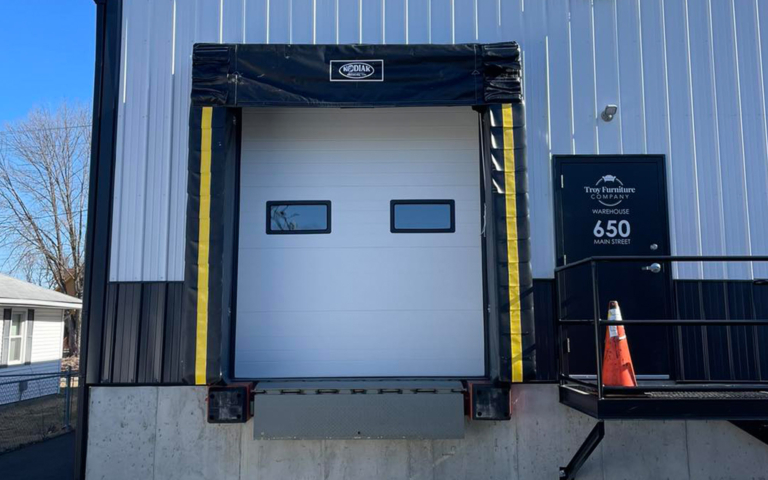

Choose dock door seals by matching the seal type to your facility use, truck sizes, dock opening dimensions, climate, traffic volume, and temperature-control needs. A properly fitted seal reduces air exchange, weather intrusion, pests, energy loss, and product damage.
Dock door seal selection – the short version
- Loading dock door seals and warehouse dock door seals create the barrier between the dock opening and trailer.
- Dock door seals are different from dock door insulation, but both affect energy performance.
- Seal choice depends on facility type, truck variability, dock dimensions, climate, and traffic volume.
- Premium dock seals are often worth it for high-traffic, cold storage, or harsh-climate facilities.
A well-chosen dock door seal is essential for keeping your facility efficient, safe, and cost-effective. With dock door seals, dock shelters, and dock door insulation often discussed together, choosing the right one can feel overwhelming.
Use this guide to make an informed decision for your warehouse, loading dock, or receiving dock.
Choose dock door seals by matching the seal type to your dock opening, trailer dimensions, traffic volume, climate, and temperature-control needs. Dock door insulation is related, but it is not the same thing as a dock door seal.

The Role of Dock Door Seals in Your Warehouse
Dock door seals, also called loading dock door seals or warehouse dock door seals, create a secure barrier between your warehouse and the back of a truck during loading and unloading.
This minimizes air exchange, protects goods from outside elements, and reduces energy loss. The right seal improves operational efficiency, workplace safety, and equipment lifespan by cutting down on exposure to weather, pests, and debris.
Benefits of the Right Dock Door Seals
- Energy efficiency: Minimizing air exchange reduces heating and cooling costs.
- Improved safety: Seals keep debris, pests, and bad weather from entering the facility.
- Product integrity: Consistent internal temperatures help protect stored goods.
- Cost savings: Properly fitted dock seals reduce wear on HVAC systems, seals, and related equipment.
- Operational efficiency: A well-sealed dock supports faster, cleaner loading and unloading.
| Selection Factor | Best Fit | What to Check |
|---|---|---|
| Consistent trailers | Dock door seals | Opening size, trailer height, foam compression, and alignment |
| Varied trailers | Dock shelters | Curtain coverage, frame clearance, and trailer-size range |
| Cold storage | Insulated or inflatable dock seals | R-value, air-tight fit, and temperature stability |
| High traffic | Reinforced premium dock seals | Fabric durability, compression wear, and trailer impact |
| Harsh weather | Dock weather seals | Moisture resistance, wind protection, and weatherproof materials |
Common Types of Dock Door Seals and Shelters
1. Dock Door Seals
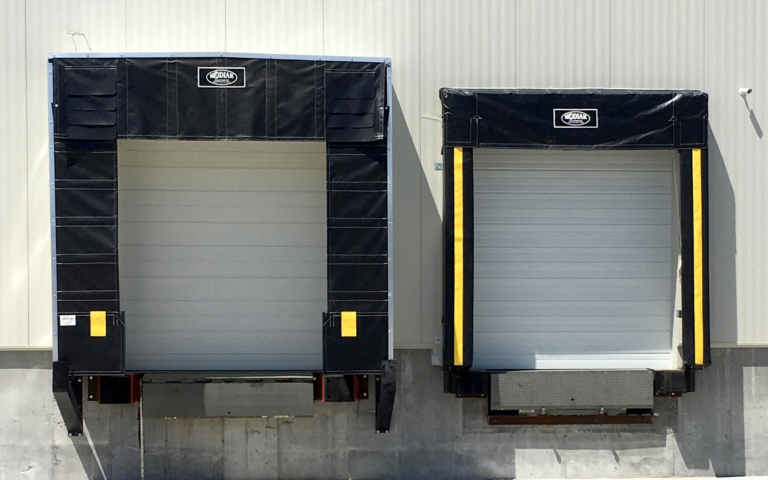
Dock seals are foam pads that compress when a truck backs into them, forming a tight seal around the edges of the loading dock. They work best for facilities with consistent truck sizes because they depend on proper alignment.
They are well-suited to smaller dock openings or situations where temperature control is critical, such as refrigerated storage. For a direct comparison, see Kodiak’s dock seals vs. dock shelters guide.
2. Dock Shelters
Dock shelters are larger structures that provide a covered opening for vehicles of varying sizes. Instead of compressing, they use curtain-like material to form a barrier around the trailer.
They suit facilities handling diverse truck sizes or requiring extra clearance, and custom dock shelters can be tailored to non-standard dock dimensions or specialized vehicles.
3. Inflatable Dock Seals
For facilities in extreme climates or those needing a nearly air-tight seal, inflatable dock seals offer advanced insulation and protection. They use inflatable tubes that conform to the shape of the truck.
Do not settle for generic seals that leave gaps between trailers and loading areas. See how custom dock seals and shelters can be tailored to your facility.
- Truck sizes are consistent and tight temperature control matters.
- You need loading dock door seals for weather, pests, and air exchange.
- The dock opening is standard and seal compression can be consistent.
- Your warehouse receives trailers of many sizes.
- Extra clearance is more important than the tightest compression seal.
- You need a custom fit for unusual dock dimensions or vehicle types.
Key Considerations for Dock Seal Selection
1. Facility Type and Purpose
Your warehouse’s primary function dictates the type of dock door seal you need. Temperature-controlled facilities, cold storage, and pharmaceutical warehouses need insulated dock seals with high R-values to minimize energy loss.
For general warehousing, durability and protection from rain, dust, pests, and outdoor elements may matter more. High-traffic docks need robust materials that can withstand frequent trailer contact.
2. Loading Dock Dimensions and Truck Variability
Dock door seals need to match your dock opening size and the dimensions of the vehicles you service. For uniform truck sizes, fixed dock seals work well. For facilities handling diverse truck types, custom dock shelters offer more flexibility.
Also account for loading dock height and width. Improper sizing leaves gaps that make seals ineffective.
3. Climate and Environmental Factors
Your location’s climate plays a major role in dock seal selection. In freezing winters or hot summers, energy efficiency becomes critical, and insulated dock door seals or inflatable options help maintain internal temperature.
For rainy or windy regions, prioritize durable dock weather seals and loading dock weather seals that resist moisture and strong wind.
4. Specific Use Cases
- Cold storage: Superior insulation and air-tight properties for precise temperature control.
- Food and beverage: Seals that keep pests and contaminants out of the facility.
- High-traffic facilities: Durable materials and reinforced seals that hold up to frequent use.
Cold storage facilities should also review the features that matter most in a cold storage door, since seal selection is only one piece of that equation.
5. Customization Options
When standard solutions do not fit your requirements, custom dock shelters or seals are worth it. They can match unique dock configurations, integrate with existing equipment, or add extra padding and reinforced materials.
Essential Dock Seal Selection Tips for Optimal Results
- Assess your facility’s needs: Evaluate stored goods, dock-use frequency, and local climate.
- Measure accurately: Precise measurements of dock openings and truck dimensions are critical for a secure fit.
- Prioritize material quality: Premium dock seals hold up better in high-traffic or harsh environments.
- Consider future scalability: Choose a solution that can adapt if your operations expand or change.
- Partner with experts: Work with a provider that understands selection, installation, and ongoing maintenance.
The Bottom Line
Selecting the right dock door seals for your warehouse affects energy efficiency, employee safety, product integrity, and long-term operating cost. Facility type, dock dimensions, climate, and use case should guide the final choice.
Investing in custom dock shelters or specialized seals means the solution fits correctly, delivering efficiency and durability you will not get from a generic, ill-fitting option.
Ready to Choose the Right Dock Door Seals?
Fill out the quick form below for dock door seal, dock shelter, weather seal, or dock door insulation guidance.
"*" indicates required fields
“The right dock door seal starts with fit. If the trailer, dock opening, and seal type do not match, even a premium material will leave gaps and waste energy.”
Kodiak Equipment Services helps facilities choose dock seals, dock shelters, dock weather seals, and custom loading dock solutions around real trailer traffic and climate conditions. Explore dock seals and shelters or request a facility review.

Frequently Asked Questions
Discover dock door seals tailored to your facility’s needs. Kodiak Equipment Services can help you choose, install, and maintain loading dock seals and shelters that keep your warehouse operating at peak efficiency.