
Choose a dock leveler by matching the type, capacity, height range, safety features, and maintenance needs to your dock traffic. Start with truck types, maximum forklift-plus-load weight, dock height, daily use, and whether you need mechanical, hydraulic, air-powered, or EOD equipment.
Dock leveler selection – the short version
- A dock leveler bridges the gap between the warehouse floor and trailer bed.
- The main types are mechanical, hydraulic, air-powered, and edge-of-dock (EOD) levelers.
- Capacity should account for both the heaviest forklift and heaviest load, plus a safety factor.
- Truck mix, dock height, traffic frequency, environment, and safety features should guide the final choice.
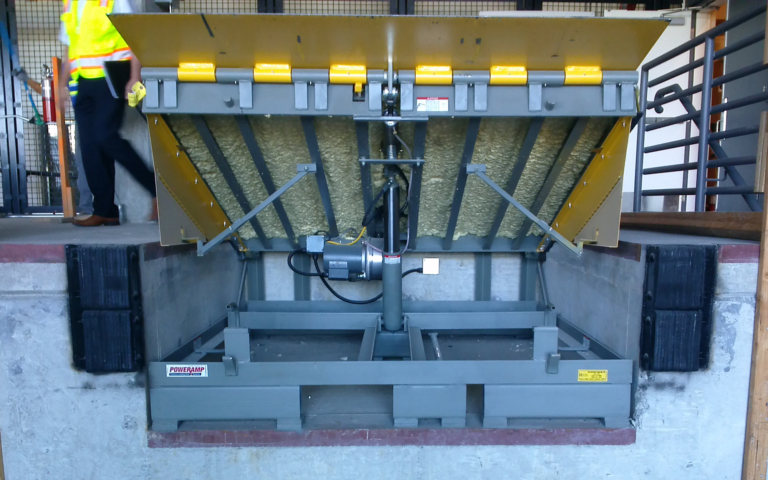
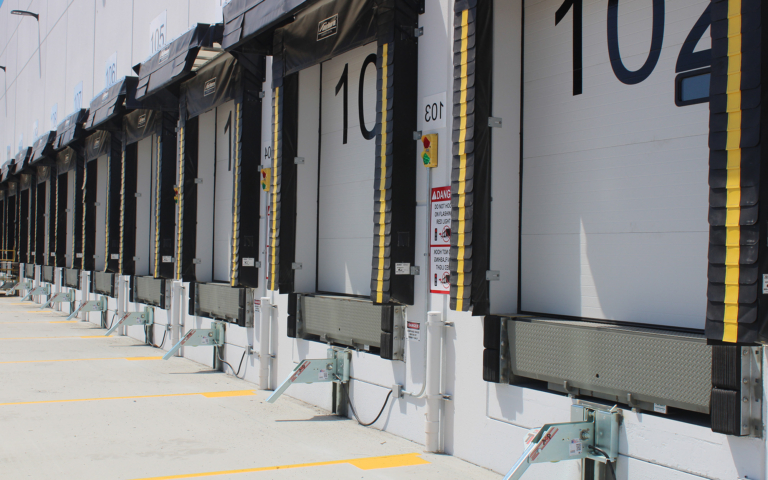
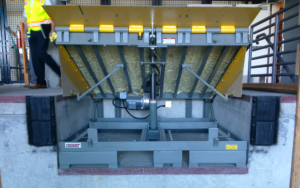
A dock leveler, also called a loading dock leveler, dock plate, or truck dock leveler, is the platform that bridges the gap between your warehouse floor and a trailer bed during loading and unloading.
It adjusts for the height difference between the dock and the truck, so forklifts and pallet jacks can move between the two without a step or a gap.
Choose a dock leveler by matching truck types, weight capacity, dock height, use frequency, operating environment, and safety requirements.
Start With Your Loading Dock and Building Needs
Before choosing a leveler, start by assessing your loading dock and building needs. This step guides everything that follows and determines which leveler actually fits your operation.
The Types of Trucks Using Your Dock
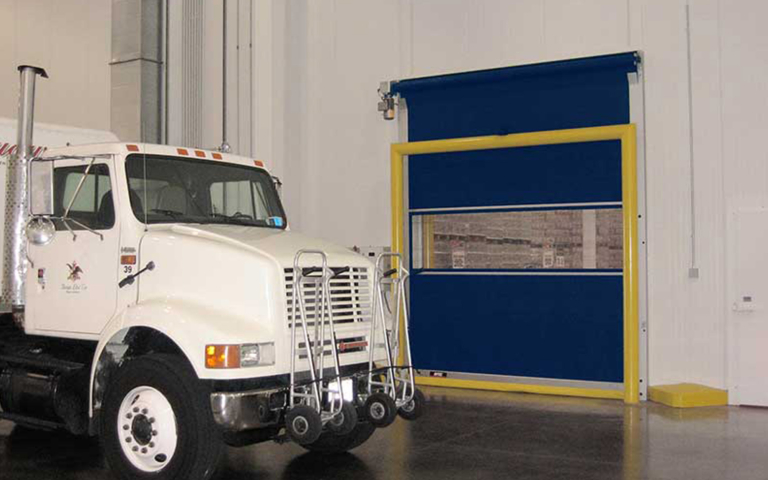
Truck bed heights and load capacities vary by vehicle type. A business handling standard delivery trucks has different requirements than one servicing trailers or shipping containers, which sometimes sit lower and need a wider adjustment range from the leveler.
Weight of Products
The weight of the goods moving across the leveler matters directly. Account for the maximum load the leveler will support, including the weight of forklifts and other material-handling equipment crossing it, not just the freight itself.
Frequency of Use
How often the leveler runs each day changes which type makes sense. High-frequency operations need a leveler built to handle constant use without frequent breakdowns.
If the dock sees steady daily truck traffic, choose a leveler around cycle volume and uptime first. Low-use docks can often stay mechanical, while high-use docks usually justify hydraulic or air-powered equipment.
Key Factors for Your Team To Consider
Weight Capacity
Dock levelers typically run 25,000 to 80,000 pounds in rated capacity. Choose one that exceeds your maximum load requirement rather than matching it exactly, because that margin protects both safety and equipment life.
A simple way to estimate the capacity you need: add the gross weight of your heaviest forklift to the gross weight of your heaviest load, then multiply that total by a safety factor of 2.5, or 3 to 4 for heavier, more frequent use. Round up to the nearest available capacity rating.
For capacity, add forklift weight plus the heaviest load, apply the right safety factor, then round up. Do not size a dock leveler to the exact maximum weight.
Dock Height and Range of Adjustment
Measure your loading dock’s height and the typical range of truck bed heights you encounter, then pick a leveler that covers that range. Hydraulic dock levelers generally offer a wider adjustment range and smoother operation than mechanical ones.
Leveler Type
There are several types of dock levelers on the market. The right choice depends on traffic, budget, height range, and how much manual effort your team can reasonably handle.
- Mechanical dock levelers: Cost-effective and suited to lower-frequency operations. They require manual operation, which takes more physical effort.
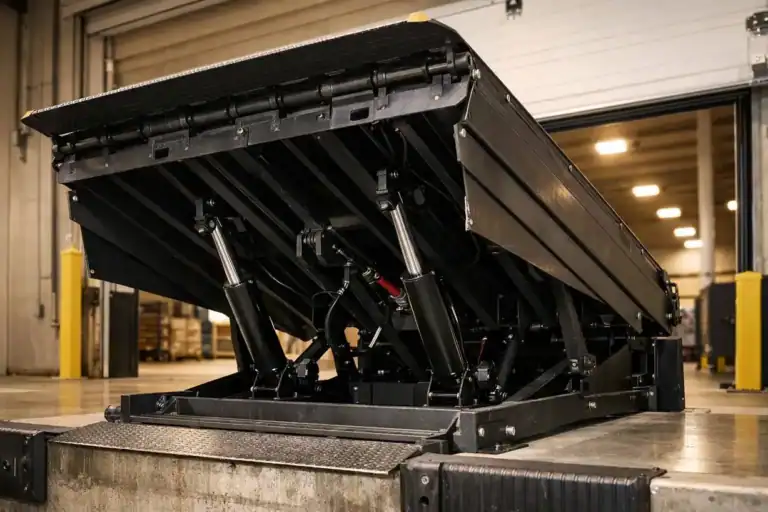
- Hydraulic dock levelers: Built for high-frequency use, with smooth operation and minimal manual effort. They cost more upfront but hold up better over time.
- Air-powered dock levelers: Use airbags to raise and lower the platform, landing between hydraulic and mechanical in cost and effort.
- Edge-of-dock (EOD) levelers: Suited to docks with minimal height difference between the dock and truck bed. EOD levelers install easily and cost less, but offer a limited range and lower capacity than pit-style levelers.
| Dock Leveler Type | Best Fit | What to Check |
|---|---|---|
| Mechanical | Lower-frequency docks and tighter budgets | Manual effort, springs, maintenance access, and cycle volume |
| Hydraulic | High-frequency loading docks | Power access, smoother operation, safety features, and long-term uptime |
| Air-powered | Facilities wanting powered operation with less hydraulic maintenance | Airbag condition, controls, and service access |
| Edge-of-dock (EOD) | Small height differences and simpler installation | Limited range, lower capacity, and truck-bed consistency |
| Shipping container use | Facilities handling containers or mixed trailer heights | Adjustment range, approach angle, and confirmed container heights |
The Operational Environment
Facilities dealing with extreme temperatures, moisture, or heavy traffic need a leveler built for those conditions specifically. Look for quality construction, corrosion-resistant materials, and weatherproof features.
Safety Features
- Toe guards: Protect workers from foot injuries.
- Lip keepers: Keep the leveler’s lip securely in place during operation.
- Safety legs: Stop the leveler from free-falling if hydraulic pressure fails.
- Interlock systems: Prevent the dock door from opening unless the leveler is correctly positioned.
Between uses, most dock levelers should be stored in the raised, cross-traffic position rather than left down. Check your specific model’s manufacturer guidance, since storage position can vary by leveler type. For more than the leveler itself, see Kodiak’s dock safety best practices guide.
- Cover your truck-bed height range without steep transitions.
- Exceed your true weight-capacity requirement.
- Match daily traffic, maintenance access, and safety needs.
- Overloading, structural wear, or unsafe forklift movement.
- Slow loading, uneven operation, or frequent repair calls.
- Compatibility problems with containers or mixed truck fleets.
Signs Your Docks Need New Levelers
Dock levelers wear out over time, which affects both efficiency and safety. Watch for these signs before a worn leveler becomes a bigger problem.
- Frequent breakdowns and repairs: If your maintenance team keeps getting called out to fix issues or replace parts, the leveler may be nearing the end of its service life. Kodiak’s dock leveler maintenance and repair guide covers when repair still makes sense versus when replacement is smarter.
- Uneven or slow operation: A leveler should provide a smooth transition between the dock and the truck bed. Uneven operation or slow response can create forklift instability or an unstable load.
- Visible wear and damage: Cracks, rust, or bent parts mean the leveler is no longer structurally sound and may fail under a heavy load.
- Inadequate weight capacity: If your leveler’s rated capacity no longer covers your current loads, it is time to upgrade.
Replace the leveler when repair calls become frequent, operation is uneven, visible damage is present, or the rated capacity no longer matches current forklift and load weights.
Additional Considerations for Selecting the Right Loading Dock Leveler
- Maintenance difficulty: Factor in how easy the leveler is to maintain and how available spare parts are. Hydraulic and air-powered levelers typically need less maintenance than mechanical ones.
- Budget limitations: A higher-priced, more durable leveler can save money over time by cutting downtime and maintenance costs.
- Installation and space requirements: Some levelers need more extensive modification to your dock area than others. Edge-of-dock levelers install more easily and cheaply but offer less range and capacity in exchange.
- Manufacturer reputation and warranty: Check the warranty and the manufacturer’s track record before buying. A strong warranty gives you a reliable fallback if something goes wrong.
- Compliance issues: Older dock levelers may not meet current safety or operational standards. Review local and industry regulations periodically to confirm your equipment still complies.
- Increased loading or unloading times: If loading and unloading are taking longer than they used to, an outdated or malfunctioning leveler is a likely cause. Some innovations in dock leveler technology operate faster and more smoothly, cutting turnaround time.
Keep Your Docks Operating Efficiently With Kodiak Equipment Services
Avoid constant repairs and breakdowns with Kodiak’s range of loading dock levelers. Our team can help you compare leveler types, capacity requirements, installation constraints, and replacement timing.
Ready to Choose the Right Dock Leveler?
Fill out the quick form below for dock leveler selection, replacement, maintenance, or loading dock equipment recommendations.
"*" indicates required fields
“The right dock leveler starts with real dock conditions: truck height, forklift weight, load weight, cycle count, and safety requirements. Guessing on capacity or range is where many facilities create avoidable problems.”
Kodiak Equipment Services helps facilities select, maintain, repair, and replace loading dock levelers around real traffic volume and operating conditions. Explore dock levelers or request a facility review.