
Loading dock safety starts with trained operators, clear communication, proper PPE, physical barriers, maintained dock equipment, vehicle restraints, documented SOPs, and emergency-response planning. OSHA-related requirements also matter for dock edges, dockboards, pedestrian walkways, lighting, and ventilation.
Loading dock safety – the short version
- Training, communication, PPE, barriers, and documented procedures reduce dock-related accidents.
- Dock safety equipment includes dock gates, bollards, safety chains, dock lights, restraints, and dock leveler safety features.
- OSHA-related requirements include guardrails or comparable barriers for 48-inch dock-edge drops and rated dockboards or levelers.
- Inspections, quick repairs, and incident reporting keep safety practices from becoming a paper-only policy.
A loading dock (also called a loading platform or loading bay) combines heavy equipment, moving vehicles, and foot traffic in a tight space, which makes it one of the higher-risk areas in a warehouse. The practices below cover training, equipment, maintenance, and OSHA requirements to reduce that risk.
Loading dock safety depends on trained operators, clear communication, PPE, barriers, maintained dock levelers, vehicle restraints, clear walkways, emergency response, and a reporting culture that fixes hazards quickly.
Comprehensive Training Programs
Thorough operator training is one of the most effective ways to prevent accidents. A training program should cover:
- Equipment operation: Operators need a working understanding of dock levelers, forklifts, and other loading equipment, including their mechanical functions, safety features, and correct use.
- Warehouse dock safety protocols: Training should cover personal protective equipment (PPE) requirements and correct loading and unloading procedures.
- Emergency procedures: Operators need to know how to respond to an equipment malfunction or an injury, including first aid basics, emergency exits, and who to contact.
Regular Refresher Courses
Safety training isn’t a one-time event. Refresher courses keep practices current and cover any new procedures or equipment.
Hands-On Training
New operators should practice using equipment under supervision before working independently – reading a manual doesn’t substitute for hands-on time.
Clear Communication Procedures
Warehouses and loading docks carry real injury risk at nearly every step, which makes clear communication between operators, drivers, and pedestrians a safety issue, not just an efficiency one.
Establish Communication Channels
Team members need a reliable way to flag hazards and coordinate operations:
- Two-way radios: Give operators a way to communicate instantly.
- Signage: Mark loading zones, pedestrian walkways, and hazards clearly, including yellow-striped edge markings at the dock face.
- Hand signals: Use standardized signals for situations where verbal communication doesn’t work.
Pre-Shift Meetings
Start each shift with a quick meeting covering the day’s tasks, any specific safety concerns, and equipment status. A short toolbox talk on one specific hazard – a recent near-miss, a seasonal weather risk – works well here and keeps the meeting from becoming a formality.
Incident Reporting
Build a culture where employees report safety concerns or near-misses without hesitation. Workers are more likely to speak up when reports lead to visible fixes rather than disappearing into a log – close the loop on what gets reported so people see it matters.
Use of Safety Equipment
Providing the right safety equipment is one of the more straightforward ways to reduce risk at a facility.
Personal Protective Equipment (PPE)
PPE requirements typically include:
- High-visibility vests: Keep workers visible to operators.
- Steel-toe boots: Protect feet from heavy objects.
- Gloves: Protect hands from cuts and abrasions.
- Hard hats: Protect against head injuries.
Safety Barriers, Gates, and Chains
Barriers and gates prevent accidents by marking off work areas and protecting pedestrians from moving equipment:
- Dock gates: Prevent falls from an elevated dock edge.
- Bollards: Protect equipment and structures from vehicle impact.
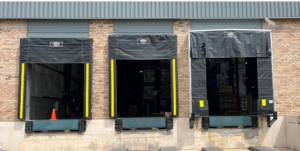
- Safety chains or retractable barriers: String across the dock opening when a trailer isn’t present, giving workers a visible, physical warning that the edge is open.
- Dock safety lights: Signal whether it’s safe to enter a trailer or approach the dock, similar to a traffic light – commonly paired with the dock leveler’s interlock system.
- Loading dock fall protection: Safety nets catch falling objects and prevent injury from dropped freight. Separately, OSHA requires guardrails or another physical barrier at any dock edge with a drop of 48 inches or more, to keep workers from falling off the dock itself – see the safety barriers available for this.
Dock Leveler Safety Features
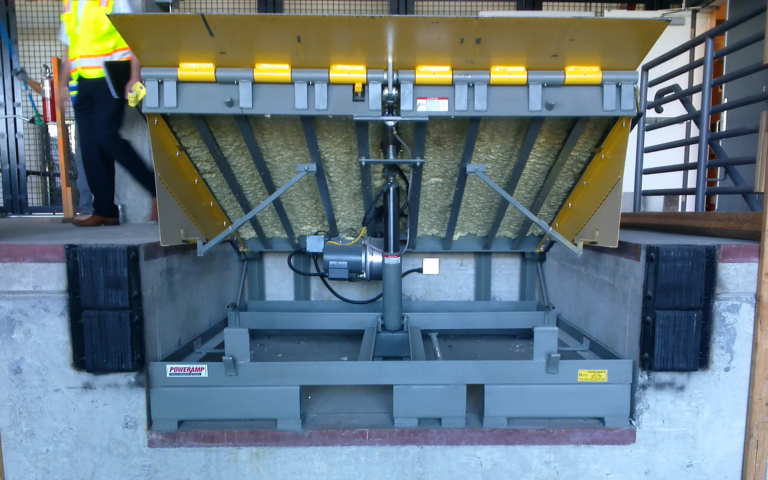
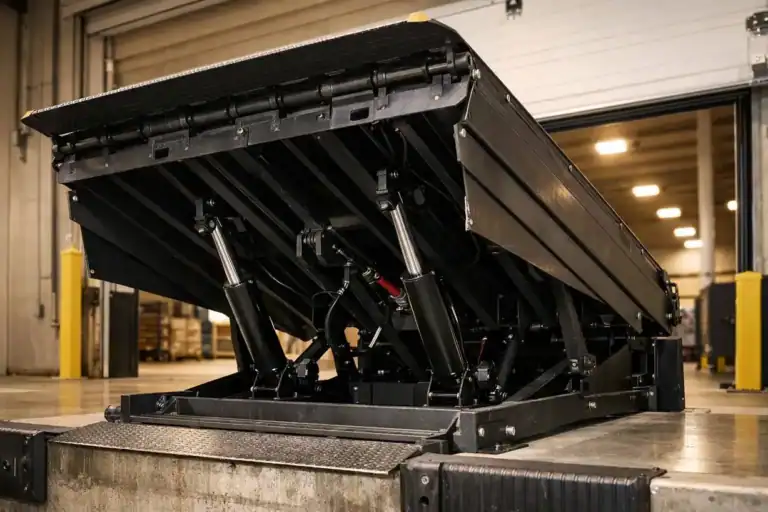
Modern dock levelers (also called dock plates or dockboards) need safety features built in:
- Toe guards: Protect against foot injuries.
- Emergency stop buttons: Stop operations immediately in an emergency.
- Automatic return to safe position: Return the leveler to a safe position when it’s not in use.
See our guide to choosing the right dock leveler for more on these features, and our overview of current dock leveler technology for what’s changed recently.
- Trained operators, visible communication, marked walkways, and clear SOPs.
- PPE, barriers, safety chains, dock lights, restraints, and maintained levelers.
- Regular inspections, fast repairs, and documented emergency-response procedures.
- Open dock edges without a physical barrier when no trailer is present.
- Dock plates or dockboards used beyond rated load capacity.
- Forklift traffic crossing cluttered or poorly marked paths.
Preventing Dock Door Strikes
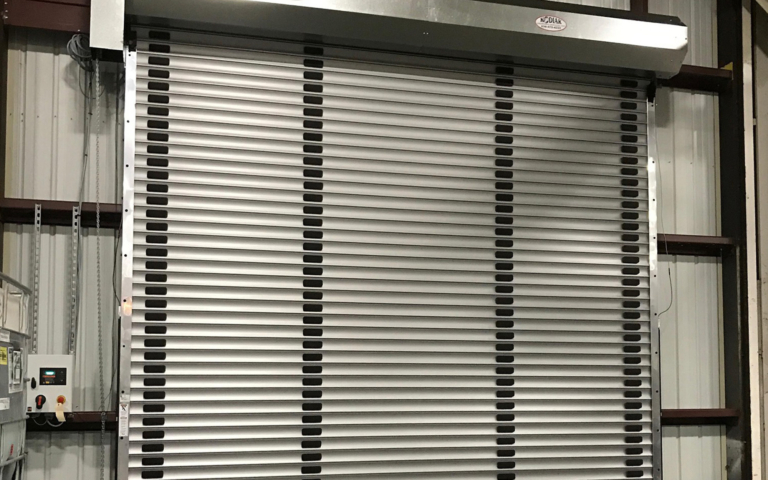
A forklift or trailer striking a dock door is a common, preventable accident that damages equipment and puts workers nearby at risk. A few practices cut this risk directly: mark clear approach paths so drivers and forklift operators know where the door swings or rolls, install dock bumpers to absorb minor impacts before they reach the door itself, and train forklift operators to confirm a door is fully open before driving through it rather than assuming it will clear in time.
Regular Maintenance and Inspections
Scheduled Maintenance
Set a maintenance schedule for dock levelers, forklifts, and safety barriers that includes:
- Routine inspections: Daily checks for wear and tear or potential hazards.
- Professional servicing: Regular servicing by qualified technicians. Our preventative maintenance program covers dock equipment on a set schedule instead of waiting for something to break.
Quick Repairs
Address identified issues immediately – delaying a repair increases the risk of equipment failure. Set up a system for reporting and tracking repairs, and when something does fail, emergency repair support keeps a broken leveler or door from shutting down the whole dock.
Accurate Documentation
Keep detailed records of maintenance and inspections. This helps track equipment condition, spot recurring issues, and shows compliance with safety regulations if it’s ever questioned.

Safe Loading and Unloading Practices
Load Securing
Properly secured loads prevent shifting during transport:
- Using restraints: Straps, chains, and other restraints keep loads secure.
- Even distribution: Balance the load evenly.
- Weight limits: Stay within the rated limits for both the dock leveler and the vehicle.
Vehicle Restraints
Vehicle restraints keep trucks from moving during loading and unloading:
- Wheel chocks: Block the wheels of trucks and trailers.
- Dock locks: Secure the trailer to the dock itself.
See our full breakdown of vehicle restraints and dock safety for how these fit into a broader safety plan.
Clear Pathways
Keep loading dock areas clear of debris and clutter, with pathways wide enough for forklifts and other equipment to move safely.
Implementing Safety Protocols
Standard Operating Procedures (SOPs)
Write step-by-step SOPs for loading dock activities – operating dock levelers, securing loads, running safety inspections.
Safety Audits
Run regular safety audits, ideally by a trained safety professional, covering every part of loading dock operations for hazards and protocol compliance.
Safety Committees
A safety committee with representatives from different departments can oversee protocol implementation, review incident reports, and recommend improvements.
OSHA Loading Dock Safety Requirements
A few specific OSHA-related rules come up often enough to call out directly:
- Fall protection: Any dock edge with a 48-inch drop or greater needs a guardrail or comparable barrier to protect workers from falling.
- Dockboard and leveler testing: OSHA requires that every dockboard or mechanical dock leveler be rated and tested to hold the maximum load it will carry.
- Pedestrian walkways: Mark pedestrian paths clearly and separate them from forklift and vehicle traffic with barriers, bollards, or striping.
- Lighting and ventilation: Loading areas need adequate lighting and ventilation for safe operation.
These cover the rules that show up most often in practice, not a complete list – confirm current, facility-specific requirements with OSHA directly or your safety officer, since specifics can vary by jurisdiction and operation type.
Emergency Response Tactics
Emergency Response Plan
Build an emergency response plan covering fires, equipment failures, and medical incidents, including:
- Evacuation routes: Clearly marked, unobstructed paths.
- Emergency contacts: A list including first responders and internal safety staff.
- First aid stations: Stocked and easy to reach.
Drills and Training
Run emergency drills regularly so employees know the plan before they need it – fire evacuations, medical emergencies, equipment malfunctions.
First Aid Training
Train employees in basic first aid, CPR, and AED use so they can respond before help arrives.
Encouraging a Safety Culture
Leadership Commitment
Leadership needs to back safety with real resources – equipment, training, and maintenance budget – not just a policy on paper.
Employee Involvement
Involve employees directly: safety committees, hazard reporting, suggestions for improvement. People who help shape a safety process tend to follow it more consistently.
Recognition and Rewards
Recognize employees who demonstrate safe practices – safety awards, incentives for reporting hazards, or simple acknowledgment in a team meeting.
Maintain a Safe Working Environment With Kodiak's Loading Dock Safety Equipment
Kodiak supplies the equipment behind these practices – dock levelers, vehicle restraints, dock bumpers, and safety barriers built for daily use. Review our loading dock equipment or contact our team to talk through what your facility needs.
Ready to Improve Loading Dock Safety?
Fill out the quick form below for dock equipment, safety barriers, restraints, maintenance, or loading dock safety recommendations.
"*" indicates required fields
“A safe dock is not just one product. It is training, communication, maintained equipment, visible traffic control, physical barriers, and a process for fixing hazards before they become incidents.”
Kodiak Equipment Services helps facilities improve loading dock safety with levelers, restraints, barriers, bumpers, and preventive service. Explore loading dock equipment or request a facility review.