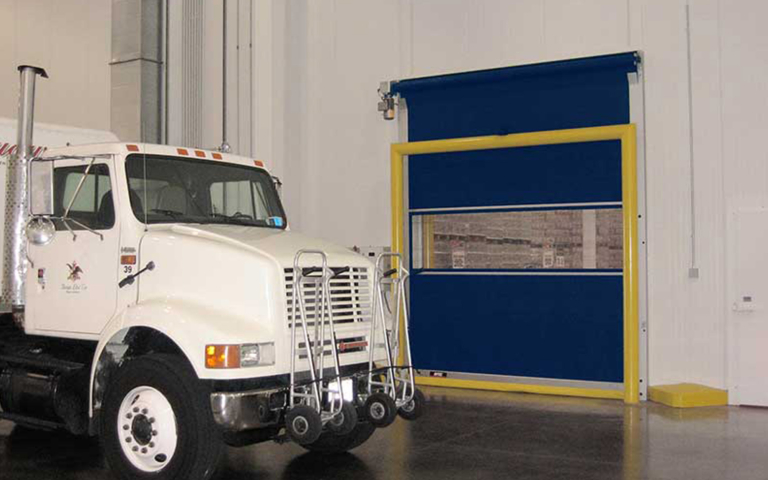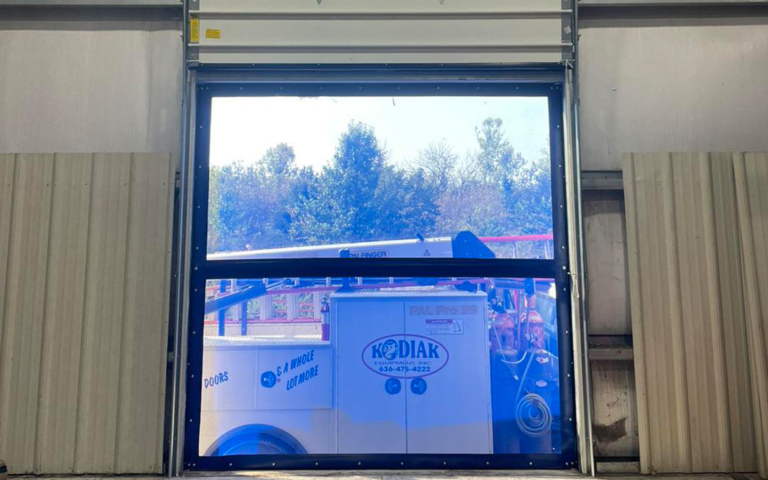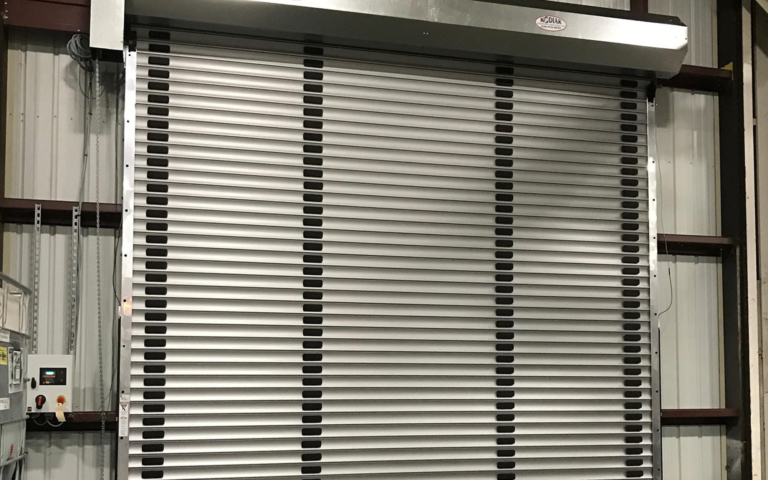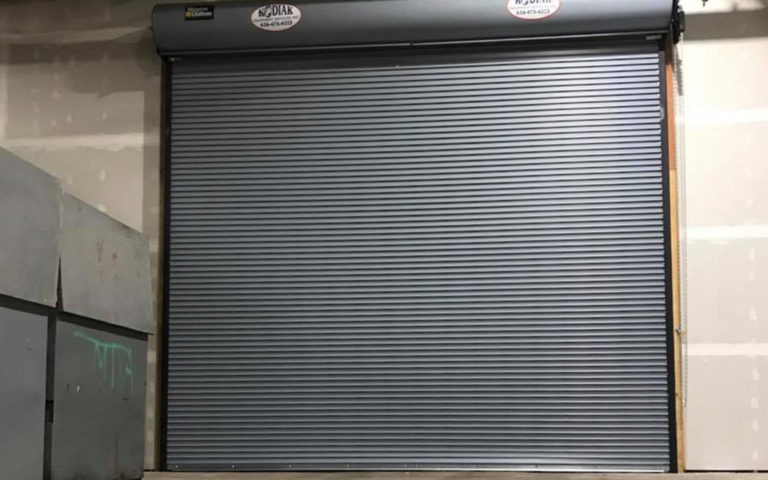

High-performance rolling doors improve energy efficiency by opening and closing faster, sealing tighter, insulating better, and using automatic controls that limit how long conditioned spaces stay exposed.
Energy-efficient high speed doors — the short version
- High speed doors reduce air loss by shortening every open-close cycle.
- Tight seals, insulation, and automatic controls reduce HVAC strain at busy openings.
- Cold storage, food processing, manufacturing, and distribution facilities usually benefit most.
- Maintenance matters because worn seals or slow sensors can erase the original savings.
Regular industrial doors are slow to open and close, and every extra second they are open lets heated or cooled air escape. High-performance rolling doors, also called high speed doors or rapid roll doors, solve that problem directly.
They open and close faster, seal tighter, insulate better, and run on automatic controls that limit how long the doorway stays open. That helps lower power bills while keeping indoor areas comfortable and controlled.
High-performance rolling doors save energy by cutting the time a doorway stays open, reducing drafts with tighter seals, protecting conditioned air with insulation, and using automatic controls that close the door right after traffic passes.
How Do High-Performance Rolling Doors Save Energy?
- Fast opening and closing speeds: The quicker a door moves, the less air is lost, which helps maintain stable temperatures inside the facility.
- Tight seals: These doors fit snugly and prevent drafts that lead to energy waste.
- Strong insulation: They keep heat or cold from moving through the door panel itself, reducing the load on heating and cooling systems.
- Automatic controls: Sensors and automated door operators make sure the door only opens when needed and closes immediately after.
| Factor | Standard Industrial Door | High-Performance Rolling Door |
|---|---|---|
| Cycle speed | Slower open-close cycle that lets more conditioned air escape | High speed cycle limits air exchange at busy openings |
| Seal performance | Basic perimeter sealing that can leak as parts wear | Tighter seals reduce drafts, moisture, and temperature loss |
| Automation | Often stays open longer between forklift or pedestrian passes | Sensors and operators close the door quickly after each cycle |
| Cold storage fit | Loses cooling quickly at high-traffic openings | Better for cold storage, food processing, and controlled environments |
Why High-Performance Rolling Doors Are the Best Choice for Energy Efficiency
Faster Operation
High-performance rolling doors move up and down much faster than standard industrial doors. Because they open and close quickly, less hot or cold air escapes, and heating or cooling systems do not have to work as hard to hold a steady temperature.
Superior Sealing
High-performance and high speed doors use tight seals that stop air from leaking in or out. That steadier temperature means less strain on heating and cooling equipment and lower energy costs.
Enhanced Insulation
These doors use insulation designed to keep indoor temperature steady, stopping heat from escaping in winter and keeping cool air inside during summer. Facilities that depend on stable temperatures, like cold storage warehouses or labs, rely on well-insulated doors to protect product.
Reduced Energy Consumption
Because they keep conditioned air from escaping, high-performance rolling doors cut electricity and heating costs directly. Industry estimates put the savings from switching to high-performance doors at up to 30% annually on the affected heating and cooling load.
Increased Durability and Low Maintenance
High-performance doors are built for heavy daily use. Standard doors wear out faster and lose seal integrity as they age; a high-performance door keeps insulation and seals working properly for years when it is properly maintained.
- Cold storage, food processing, manufacturing, and distribution openings with frequent cycles.
- Facilities losing heating or cooling through slow, poorly sealed industrial doors.
- Operations that need automatic controls, fast movement, and better seal performance.
- The opening has low traffic and energy loss is not a meaningful cost.
- A standard commercial door already seals tightly and rarely stays open.
- The facility needs a simple repair before considering a door upgrade.
Reducing Energy Costs With Rolling Doors
Saving energy means saving money. A door that opens fast, seals tight, and closes on its own can cut heating and cooling costs by up to 30% a year on that load for facilities with a large warehouse, factory, or storage area and regular door traffic.
These doors can also reduce repair and replacement costs over the long run. That combination, lower energy bills and fewer service calls, is what makes the upfront cost pay back over time instead of simply adding expense.
Why Energy-Efficient Doors Are Better for the Environment
Using less energy for heating and cooling reduces a facility’s carbon footprint, which matters for businesses working toward sustainability goals or LEED-related building requirements. Some local energy codes are also starting to factor door performance into commercial building compliance.
Sustainability matters most in industries like warehousing, cold storage, and manufacturing, where controlling indoor temperature is part of the operation. Choosing a high-performance door lets a business cut energy use and environmental impact at the same time.
Industries That Benefit the Most from Energy-Efficient Doors
- Manufacturing facilities: Reduce energy waste by sealing production areas and holding stable indoor temperatures.
- Distribution centers: Move goods quickly at the dock while keeping energy costs under control.
- Cold storage facilities: Hold precise temperatures at high-traffic doorways, where standard doors lose the most conditioned air. See Kodiak’s guides to cold storage door features and how cold storage doors differ from standard doors.
- Food processing plants: Keep air clean and temperatures stable to protect food safety and quality.
- Pharmaceutical and medical facilities: Maintain the precise storage temperatures medicine and supplies require.
- Retail and distribution loading areas: Cut energy loss at back-of-house doors without slowing down deliveries.
- Automotive and aerospace facilities: Support controlled environments that reduce production downtime.
The Importance of Choosing a Professional Equipment Company
Investing in energy-efficient rolling doors only pays off if the installation and selection are handled correctly. The right provider helps match door speed, seal type, insulation, and controls to the facility.
- Proper installation: Correct installation maximizes sealing, durability, and smooth operation.
- Ongoing maintenance and support: Preventative maintenance protects insulation and automation performance.
- The right door for the job: A reputable provider can recommend the right speed, seal, and insulation combination. Kodiak’s guide to choosing a high-performance rolling door covers that decision in more detail.
Boost Energy Efficiency and Savings with Kodiak's Rolling Doors
Kodiak Equipment Services provides high-performance rolling doors designed to cut energy waste, improve working conditions, and pay for themselves over time through lower utility bills and fewer repairs.
Talk to Kodiak about which door speed, seal, and insulation setup fits your facility.
Ready to Improve Door Energy Efficiency?
Fill out the quick form below for high-performance rolling door recommendations based on your facility traffic, temperature needs, and energy goals.
"*" indicates required fields
“Energy savings from high-performance rolling doors come from speed, seal quality, insulation, and maintenance working together. A fast door with a worn seal is not efficient for long.”
Kodiak Equipment Services helps facilities choose high-performance rolling doors, operators, and maintenance plans around real traffic and temperature-control needs. Explore high-performance rolling doors or request a facility review.